

Blog
The 7 Most Common Causes of Seal Failure

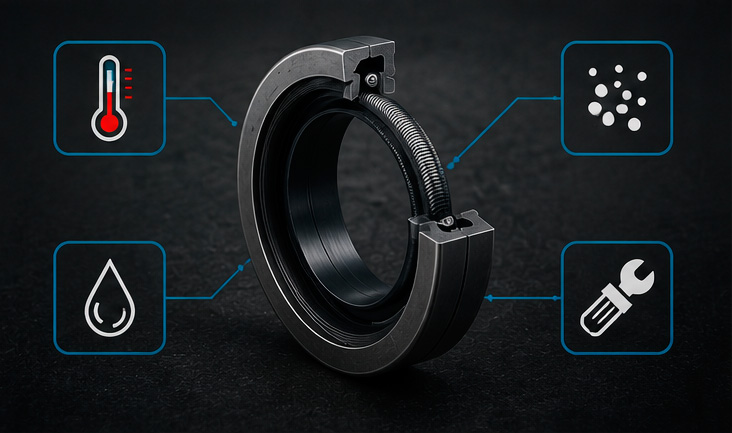
Premature seal failure is not always caused by poor product quality. In most cases, the root cause lies in improper material selection, unsuitable operating conditions, or incorrect installation.
1. Incorrect Material Selection
Every sealing material has different resistance to temperature, pressure, and chemicals. Using an unsuitable material can lead to swelling, hardening, or cracking, ultimately resulting in premature seal failure.
2. Excessive Temperature
High operating temperatures reduce the service life of elastomeric seals and accelerate material aging.
Typical maximum operating temperatures:
- NBR: up to +100°C
- EPDM: up to +150°C
- FKM: up to +200°C
- PTFE: up to +260°C
3. Incorrect Installation
Installing a seal without proper lubrication or over sharp edges can damage the sealing surface before the equipment is even put into operation.
4. Worn Shaft or Housing
Scratches, corrosion, or out-of-tolerance shaft or housing surfaces can cause leakage, even when a new seal is installed.
5. Excessive Pressure
In high-pressure applications, the sealing element may be forced into the clearance gap, leading to seal extrusion and premature failure.
Solution:
Use a suitable sealing material or install a Back-Up Ring to prevent extrusion.
6. Chemical Attack
Certain oils, fuels, and chemicals are not compatible with all elastomeric sealing materials. Chemical incompatibility can cause swelling, hardening, softening, or material degradation, leading to premature seal failure.
Choosing the correct sealing material for the application can significantly extend the service life of the seal.
7. Lack of Maintenance
Dust, dirt, inadequate lubrication, and normal equipment wear can all contribute to premature seal failure.
Regular inspection and preventive maintenance help extend seal life, improve equipment reliability, and reduce unexpected downtime.
Conclusion
Selecting the right seal involves much more than choosing the correct dimensions. Proper evaluation of the application, material, and operating conditions is essential to ensure reliable performance and maximize equipment service life.
If you are unsure which sealing solution is best suited to your application, the Sealpoint team is ready to help you select the right product for your specific requirements.
